
Two epigenetic regulators interfere with healthy aging

- Posted by admin in English

It has long been assumed that lifespan and health are strongly correlated, but although there has been an overall increase in human life expectancy in recent decades, it is too often accompanied by deterioration of health.

A new study published on February 26 in Nature shows the influence of two epigenetic regulators on aging. Scientists led by Jie Yuan from the Chinese Academy of Sciences in Shanghai have studied the BAZ-2 and SET-6 proteins in Caenorhabditis elegans worms, which are orthologs of the human proteins BAZ2B and EHMT1.

Through genome-wide RNA-interference-based screening of genes that regulate behavioral deterioration in aging C. elegans, the researchers identified 59 genes as potential health modulators during aging. Essentially the proteins expressed by these genes, read and write epigenetic signals.

Among these modulators, they found that a neuronal epigenetic reader, BAZ-2, and a neuronal histone SET-6, accelerate the deterioration of the behavior of C. elegans by reducing the mitochondrial function, and repressing the expression of the encoded mitochondrial proteins. in the cell nucleus.

The researchers found that the levels of the two proteins increase with age in C. elegans and mice, which in turn attenuates the expression of genes involved in mitochondrial function.

BAZ-2 and SET-6 are complementary epigenetic mechanisms. SET-6 is an "epigenetic writer" and BAZ-2 is an "epigenetic reader" which recognizes modified histones and recruits transcriptional regulators.

Histones are proteins located in the nucleus of eukaryotic cells. They are the main protein components of chromosomes. They are closely associated with DNA and allow their compaction, but they also modify the expression of proteins by various epigenetic mechanisms known as the "histone code".
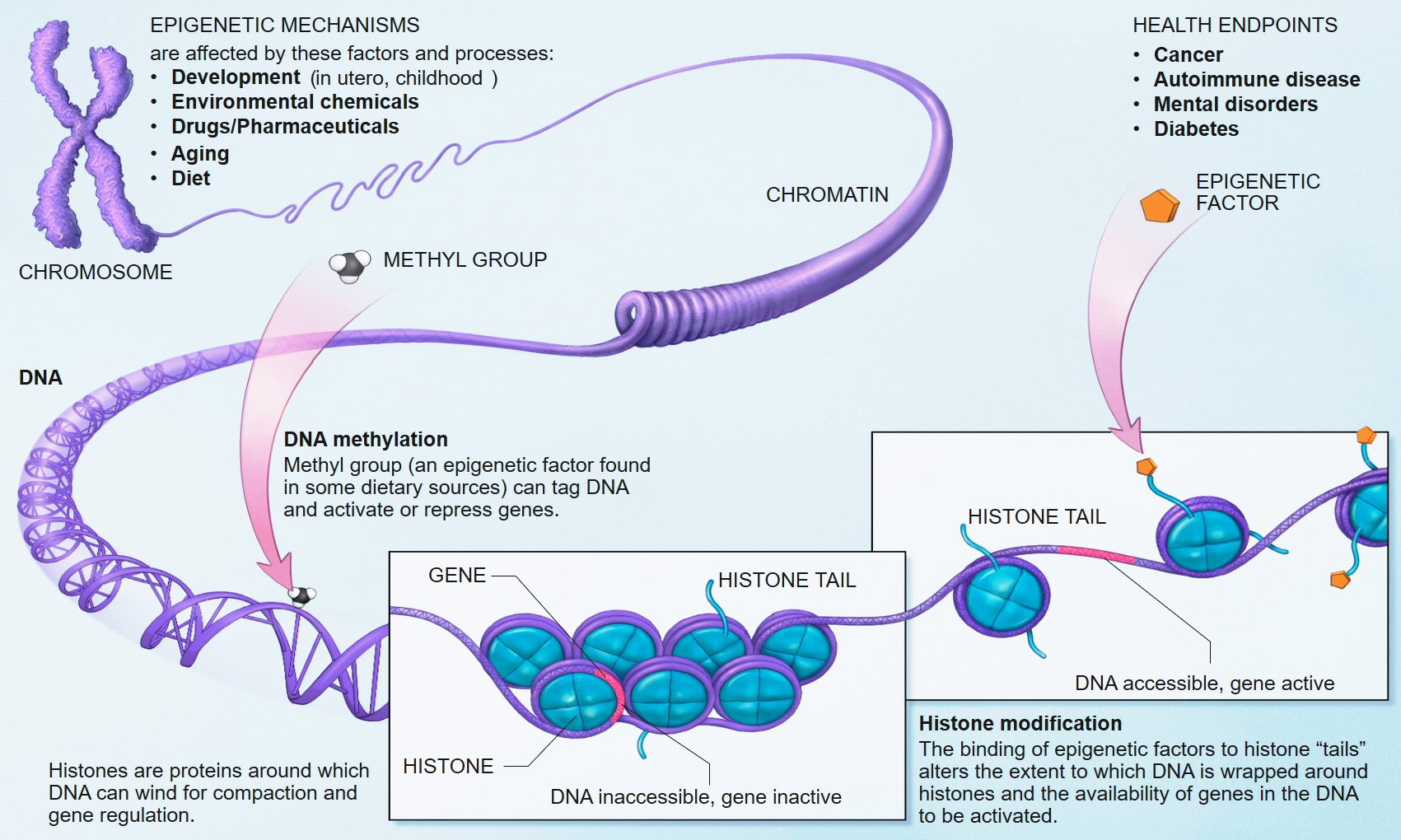
enter image description here Source Wikipedia.

How do BAZ-2 and SET-6 accelerate aging? The researchers found that the two proteins bind together to the promoter regions of more than 2,000 genes, and decrease their expression via methylation of histones. Among these target genes are many mitochondrial genes encoded nuclear. By suppressing the expression of these genes, BAZ-2 and SET-6 reduce oxygen consumption and ATP production, and decrease the critical stress responses that maintain mitochondrial proteostasis. The resulting metabolic slowdown discourages the worms from assimilating their food and they mate less.

This mechanism is conserved in the neurons of cultured mice and human cells. What about the orthologs of these epigenetic proteins in humans? A review of the databases shows that expression by human orthologs of the two proteins mentioned above, BAZ2B and EHMT1, increases with age and is positively correlated with the progression of Alzheimer's disease. Researchers have verified that ablation of BAZ-2 mouse ortholog Baz2b attenuates age-dependent body weight gain and prevents cognitive decline in aging mice.
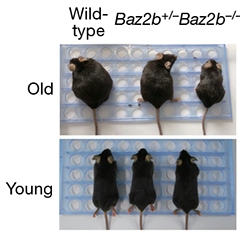
enter image description here While wild-type mice grew fat with age, animals lacking both copies of the epigenetic reader Baz2b stayed trim, indicating improved mitochondrial function. [Yuan et al., Nature, 2020.]

However, it must be asked whether BAZ-2 and SET-6 would rather mediate age-related physiological adaptation, rather than the agents of aging itself. Indeed their action could reflect a mechanism of adaptation to a progressively more hostile biological environment.

Old Article 5

- Posted by system in English

Old Article 4

- Posted by system in English

Old Article 3

- Posted by system in English

Old Article 2

- Posted by system in English

Old Article 1

- Posted by system in English

Analysis of the Text: Significance, Importance, Timeliness, and Relevance

The text presents a study on the use of high-density surface electromyography (HD-sEMG) to track physiological changes in muscles of individuals with Amyotrophic Lateral Sclerosis (ALS) during sustained contractions. This research has significant implications for understanding the progression of ALS and potentially informing disease management strategies.

Significance:

ALS is a devastating neurodegenerative disease with limited therapeutic options. The study's focus on tracking physiological remodeling and fatigue dynamics in ALS muscles is crucial for developing effective interventions.

Importance:

The text highlights the importance of noninvasive techniques like HD-sEMG for assessing motor unit morphology, fatigue, and spatial patterns of muscle activation in individuals with ALS. This can provide valuable insights into the physiological underpinnings of the disease.

Timeliness:

The study's findings are relevant to ongoing research in ALS and motor neuron diseases. The use of HD-sEMG as a noninvasive diagnostic tool has the potential to revolutionize our understanding of these conditions.

Relevance:

The study's results can inform the development of personalized treatment plans for patients with ALS, taking into account individual differences in muscle physiology and response to fatigue.

Insights on Usefulness for Disease Management or Drug Discovery:

The text provides valuable information on the utility of HD-sEMG in tracking physiological changes in ALS muscles. The study's findings can be used to:

  1. Develop more effective biomarkers for ALS diagnosis and progression tracking.
  2. Inform the design of clinical trials for ALS treatments.
  3. Guide personalized treatment approaches for patients with ALS.

Originality:

The study presents novel insights into the use of HD-sEMG in ALS research, but it builds upon existing knowledge in the field. The findings are consistent with previous studies on the use of HD-sEMG in muscle physiology and motor neuron diseases.

Comparative Analysis:

The text's findings on the strong spatial organization in both healthy and ALS muscles during baseline contractions align with previous studies on muscle physiology. However, the study's results on the variable ALS responses during sustained contractions provide new insights into the disease's progression.

Comparison with State-of-the-Art:

The study's use of HD-sEMG to track physiological changes in ALS muscles is a state-of-the-art approach in motor neuron disease research. The findings contribute to our understanding of ALS and can inform the development of more effective diagnostic and therapeutic strategies.

Conclusion:

The text presents a valuable contribution to ALS research, highlighting the potential of HD-sEMG as a noninvasive tool for tracking physiological changes in muscles of individuals with ALS. The study's findings have significant implications for disease management and inform the development of personalized treatment approaches for patients with ALS.

Read the original article on medRxiv

Significance of the Topic

The topic of this text revolves around understanding the molecular mechanisms underlying the genetic risks associated with Alzheimer's disease (Alzheimer's disease) conferred by the Apolipoprotein E (APOE) gene. Specifically, it explores the role of the 4 and 2 alleles of the APOE gene in modulating Alzheimer's disease pathology. The significance of this topic lies in its potential to shed light on the underlying biology of Alzheimer's disease, a complex and multifactorial disease.

Importance

Alzheimer's disease is a devastating and debilitating neurodegenerative disorder that affects millions of people worldwide. Understanding the genetic and molecular mechanisms underlying Alzheimer's disease is crucial for developing effective therapeutic strategies and preventing or slowing disease progression. The APOE gene has been associated with Alzheimer's disease risk, with the 4 allele being a well-established risk factor.

However, the underlying molecular mechanisms remain poorly characterized, making this research area highly important and timely.

Timeliness

The text is timely as it addresses a critical knowledge gap in the field of Alzheimer's disease research. Recent advances in proteomics and genomics have enabled researchers to systematically profile APOE-associated proteomic alterations in human samples, providing new insights into the molecular mechanisms underlying Alzheimer's disease. The text leverages these advances to investigate the role of the APOE 4 and 2 alleles in Alzheimer's disease pathology, making it a timely contribution to the field.

Relevance

The text has significant relevance to Alzheimer's disease research, as it provides novel insights into the molecular mechanisms underlying APOE-driven Alzheimer's disease pathology. The findings have implications for the development of therapeutic strategies for early intervention and potentially for the identification of new targets for Alzheimer's disease treatment.

Furthermore, the text highlights the importance of considering the APOE 4 and 2 alleles as distinct risk factors for Alzheimer's disease, rather than just focusing on the 4 allele.

Analysis of the Text

The text presents a comprehensive analysis of APOE-associated proteomic alterations across five cohorts, using a range of proteomics platforms and samples, including plasma and cerebrospinal fluid (cerebrospinal fluid). The study uses systematic profiling to identify a comprehensive APOE-protein network and applies mediation modeling to classify genotype-related signals as upstream mediators, downstream consequences, or APOE-specific changes. The text then leverages cerebrospinal fluid beta-amyloid (A ) biomarker data to improve temporal resolution and isolate early, A -independent proteomic programs.

The findings of the text are significant, as they provide novel insights into the molecular mechanisms underlying APOE-driven Alzheimer's disease pathology. The study identifies allele-specific, temporally structured proteomic signatures that precede Alzheimer's disease pathology, offering potential therapeutic targets for early intervention. The text highlights the importance of considering the APOE 4 and 2 alleles as distinct risk factors for Alzheimer's disease and underscores the challenges in reproducibility associated with proteomics studies.

Usefulness for Disease Management and Drug Discovery

The text provides valuable insights for Alzheimer's disease disease management and drug discovery, as it highlights the potential therapeutic targets for early intervention. The identification of allele-specific, temporally structured proteomic signatures offers a new perspective on Alzheimer's disease pathology and provides a starting point for the development of novel therapeutic strategies. The text also underscores the importance of considering individual variability in APOE genotype as a critical factor in Alzheimer's disease risk, which may inform personalized medicine approaches.

Original Information Beyond the Obvious

While the text presents novel insights into the molecular mechanisms underlying APOE-driven Alzheimer's disease pathology, it does not break new ground in terms of fundamental understanding.

However, the systematic profiling and mediation modeling approaches used in the study provide a comprehensive and nuanced understanding of APOE-associated proteomic alterations, which is a significant advance in the field. The text highlights the challenges associated with reproducibility in proteomics studies, emphasizing the need for careful consideration of sample size, platform choice, and data analysis methods.

Overall, the text provides a comprehensive and insightful analysis of APOE-associated proteomic alterations in human samples, highlighting the importance of considering individual variability in APOE genotype as a critical factor in Alzheimer's disease risk. The findings offer novel insights into the molecular mechanisms underlying APOE-driven Alzheimer's disease pathology and provide potential therapeutic targets for early intervention.

Read the original article on medRxiv

Episodic memory plays a critical role in supporting adaptive behavior; however, whether it can be causally regulated in humans via deep subcortical stimulation remains unclear. In the present study, we investigated the differential effects of substantia nigra (SN) and subthalamic nucleus (STN) stimulation on episodic memory, as well as the underlying mechanisms of its associated brain networks, using a recognition memory task combined with concurrent functional magnetic resonance imaging in patients with Parkinsons disease. SN-DBS increased recognition sensitivity and reduced false alarms at both frequencies, whereas 10 Hz STN-DBS reduced sensitivity and increased false alarms. Functional connectivity analyses in the absence of DBS stimulation identified a false recognition-related network linking nigral, pallidal, subthalamic, medial temporal, frontal, and occipital regions. SN-DBS-related false alarm reduction tracked modulation of this circuit and was marked by its baseline vulnerability state. These behavioral effects mapped onto target-dependent parieto-occipital and SN-visual retrieval pathways, supporting a model in which DBS bidirectionally regulates recognition memory through target- and frequency-dependent subcortical-cortical circuits.

Read the original article on medRxiv

Analysis of the Text: Significance, Importance, Timeliness, and Relevance

The text discusses the use of advanced proteomic analysis techniques to identify potential biomarkers for Amyotrophic Lateral Sclerosis (ALS), a rapidly progressive and fatal neurodegenerative disease. Biomarkers are crucial for improving patient care and therapeutic development. The article's significance lies in its exploration of novel methods for ALS biomarker discovery, which can lead to better diagnosis, treatment, and management of the disease.

Importance

ALS is a devastating disease that affects motor neurons, leading to muscle weakness, paralysis, and eventually death. Current treatments are limited, and a cure is still not available. Improved biomarkers can accelerate the development of effective treatments by enabling earlier diagnosis, tracking disease progression, and evaluating treatment response. The identification of novel biomarkers can also lead to a better understanding of ALS pathophysiology, which can inform therapeutic strategies.

Timeliness

The article is timely as it addresses the pressing need for ALS biomarkers. The Target ALS Global Natural History Study (TALS GNHS) provides a valuable resource for biomarker discovery, and the use of advanced proteomic analysis techniques is a significant step towards addressing this need.

Relevance

The text is relevant to the field of neurodegenerative disease research, particularly ALS. The study's results can inform future research directions and potential therapeutic developments. The use of unbiased proteomic analysis and the identification of known and novel differentially expressed proteins (DEPs) can lead to a better understanding of ALS biology and the development of effective treatments.

Analysis of each item in the text

  1. Amyotrophic Lateral Sclerosis (ALS): ALS is a rapidly progressive and fatal neurodegenerative disease that affects motor neurons. The current lack of effective treatments and the importance of biomarkers for improving patient care and therapeutic development make ALS a significant focus of research.
  2. Improved biomarkers: Biomarkers are essential for ALS diagnosis, treatment, and management. The development of novel biomarkers can lead to earlier diagnosis, tracking disease progression, and evaluating treatment response.
  3. 35-plex isobaric tandem mass tag labeling (TMTpro): TMTpro is a proteomic analysis technique that allows for unbiased analysis of biofluids. The use of TMTpro in this study enabled the identification of 2,875 proteins in CSF and 1,118 proteins in plasma.
  4. Cerebrospinal fluid (CSF) and plasma: CSF and plasma are biofluids that can provide valuable insights into ALS biology. The analysis of these biofluids using TMTpro can identify novel biomarkers for ALS.
  5. Target ALS Global Natural History Study (TALS GNHS): The TALS GNHS is a valuable resource for ALS biomarker discovery. The study's results are made available to the research community, promoting collaboration and accelerating biomarker development.
  6. Proteomic analysis: Proteomic analysis techniques, such as TMTpro, can identify differentially expressed proteins (DEPs) between controls and ALS patients. The identification of DEPs can lead to the development of novel biomarkers and a better understanding of ALS biology.
  7. Comparison with Olink proximity extension assay proteomics: The comparison with Olink proteomics highlights the strengths and limitations of each platform. This comparison can inform future research directions and potential therapeutic developments.

Usefulness for disease management or drug discovery

This study's results can lead to the development of novel biomarkers for ALS, which can be used for:

  1. Early diagnosis: Biomarkers can enable earlier diagnosis of ALS, allowing for timely intervention and potentially improving treatment outcomes.
  2. Tracking disease progression: Biomarkers can track disease progression, enabling researchers to evaluate treatment response and adjust therapeutic strategies accordingly.
  3. Treatment development: The identification of novel biomarkers can inform the development of effective treatments for ALS.
  4. Understanding ALS biology: The study's results can provide insights into ALS biology, which can inform therapeutic strategies and potential treatments.

Original information beyond the obvious

The study's use of TMTpro for unbiased proteomic analysis of CSF and plasma is a significant advancement in ALS biomarker discovery. The identification of 2,875 proteins in CSF and 1,118 proteins in plasma provides a comprehensive understanding of ALS biofluidomics. The comparison with Olink proteomics highlights the strengths and limitations of each platform, providing valuable insights for future research directions.

Read the original article on medRxiv


Please, help us continue to provide valuable information: